Curious Friends Deepening their Connection and Community
A Time for Reflection
If Veganuary 2026 planted seeds, Vegan for Lent tended them. When Ash Wednesday arrived in mid-February, the Vegan Curious QVW group had already spent months building the relationships, practical knowledge, and mutual trust that made this second initiative something qualitatively different from the first. Friends arrived for Lent not as strangers to the challenge, but as a community with shared history.
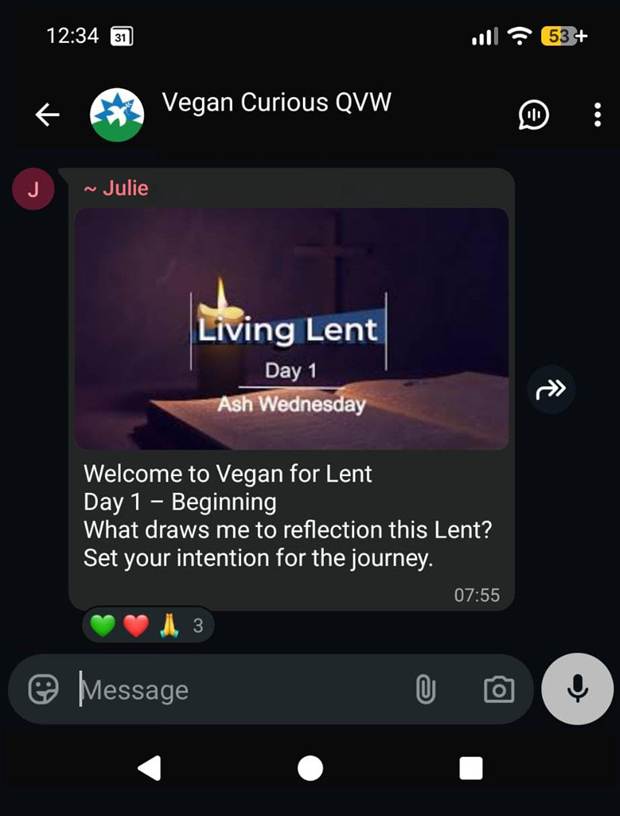
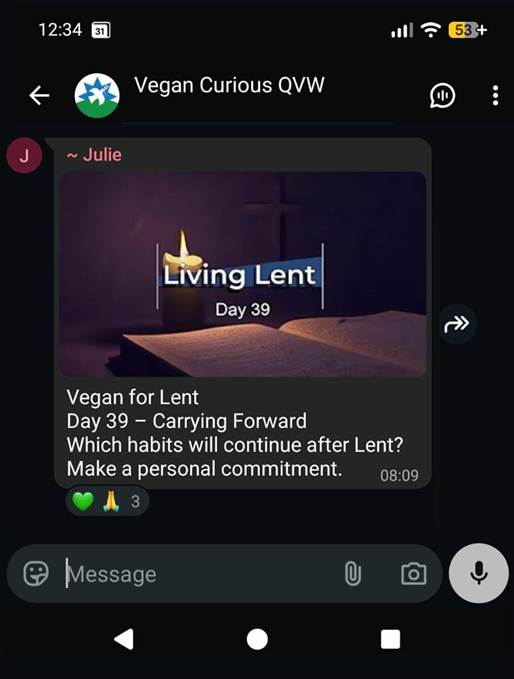
The initiative was shaped significantly by Julie’s commitment to posting daily reflective prompts throughout the forty days. This act of sustained pastoral care was named explicitly by several Friends as what made the Lent journey feel spiritually meaningful rather than just a dietary challenge. As Kerri noted at the close: “Thank you Julie for diligently posting these reflections every day.”
The prompts drew the community practice into wider territory: food miles, mindful eating, gratitude, simplicity, and the ethics of consumption beyond what ends up on the plate.
Space for the Sacred
The most distinctive quality of Vegan for Lent, compared to Veganuary, was how explicitly Friends engaged with the spiritual dimension of the practice. Lent’s traditional logic of giving something up as a form of discipline and attention was reframed as a mindful practice of connection and deepening.
Kerri offered a grounding insight that resonated widely: “I find it helpful reflecting on the meaning of ‘sacrifice’ being to ‘make sacred’. For me, animals and the earth is sacred. This Lent I have stopped processed vegan products and that has helped me view my body as sacred too, thinking about what I put into my body more.”
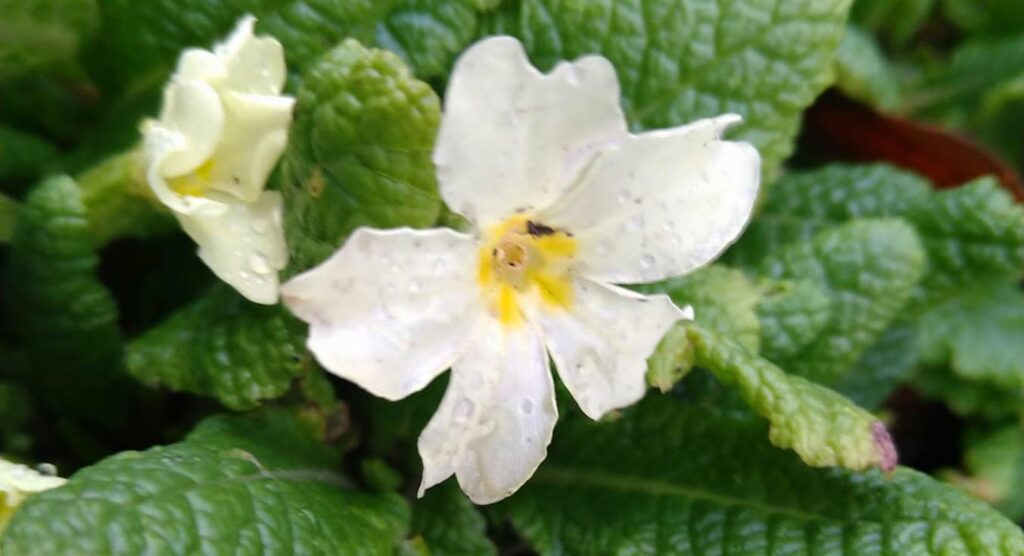
This reframing proved generative for many. Another Friend extended it: “Lent is a time, having turned away from complex consumerism of food and other stuff, there’s a turning instead towards the sacred: making more time for the sacred and less time for over-consuming, so Lent can be a time to re-balance.”
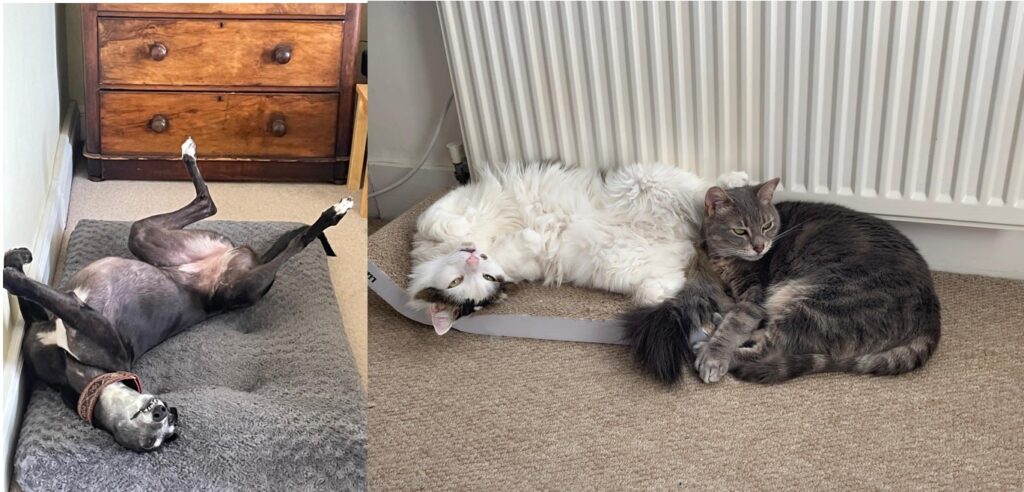
Even for Friends in the group who would describe themselves as non-theist Quakers, the language of the sacred being directed toward animals, the earth and the inner life rather than toward a conventional sense of the divine, also found this framing helpful. A passage from Quaker Faith & Practice (24.60), shared by one Friend, expressed what many seemed to be reaching for: “What matters is living our lives in the power of love and not worrying too much about the results.” I’m sure these furry quaker friends who also took part would agree:
From Far and Wide
The group continued to demonstrate the geographic and motivational diversity that characterised Veganuary. Friends joined from across Britain: Farnborough, Broad Campden, Newcastle, Worthing, Sidmouth, alongside the growing international thread, with a Friend joining from Campus Friends Meeting in Ohio, and the ongoing presence of Friends in Kenya. The community’s global spread kept the conversation honest about how profoundly context shapes what veganism means and what it demands.
New joiners arrived during Lent itself. A Friend came with fifty years of vegetarianism behind her, now navigating health challenges.
Her arrival opened a warm and practically substantive thread on tofu, tempeh, kala namak salt, and the digestive complexity of beans for some, the kind of exchange that would be impossible to find in a generic vegan forum, and that reflects how genuinely this community meets people where they are.
Honest Moments
Lent unfolded alongside the ordinary rhythms of life in full, and the chat captured this with characteristic honesty. One Friend spent a night at A&E with her mother-in-law, relying on whatever sandwiches and hot drinks NHS staff could provide, and reflected on what it means to hold ethical commitments when you have no control: “I’m grateful for every cup of tea, biscuit, cheese sandwich. I honestly didn’t know when the next one was coming. It was brought with kindness. It made me think of all those who do not know where the next meal is coming from.”

Shortly after, the same Friend was offered pizza by women breaking their Ramadan fast in the hospital visitors’ room: “I declined as it was chicken and said sorry I’m vegetarian, but felt sad that I didn’t share in this beautiful act of kindness and humanity. Made me think there’s so much to consider these days, sometimes basics, like love and peace are the most important.”
The group held this reflection with care. There was no correction, no hierarchy of ethical commitments, no competitive virtue. The conversation recognised that veganism, Quakerism, and human solidarity sometimes pull us in interesting directions, and that negotiating this in real time, under pressure, is part of what it means to take practical ethical living seriously.
Another Friend confessed to a different kind of lapse: “The restaurant delivered us some chicken curry by mistake. I ate all of it, to avoid it going to waste.” The group’s response, characteristically, was warmth rather than criticism.
The Supply Chain as Spiritual Territory
One of the most intellectually rich threads of the Lent period concerned oat milk which became, improbably, a lens through which the group examined the full complexity of ethical consumption. The catalyst was a Friend wrestling with whether to switch from a local dairy farm delivering in glass bottles to a plant-based alternative.
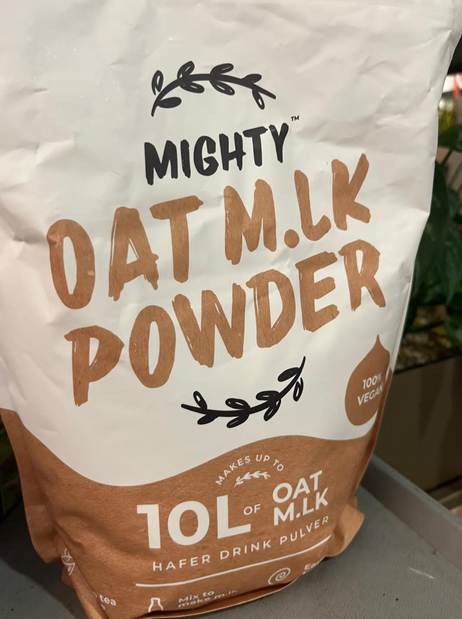
What followed was a genuinely nuanced exchange. Friends named Overherd (powdered, UK-made, low-transport-miles), Oato (fresh, glass-bottle delivery), and PureOaty (grown in the UK, available in Morrisons). One Friend made public what she had decided privately: that despite preferring Oatly’s taste, she had stopped buying it because of Blackstone’s investment and its documented involvement in Amazon deforestation. “I think for people starting out on being vegan, Oatly is still probably a good starting place to explore alt milk options. If someone had swept in when I was starting out to tell me not to use x, y or z vegan product I’d have felt a bit overwhelmed.” This was exactly the kind of calibrated honesty that characterises the group at its best.
Philippe’s contribution to the thread drew the frame wider: “Considering ‘air miles’ is an interesting place to start… Why a vegan mindset is helpful is that you start to consider all the inputs. It’s no good if your cow is reared in Surrey if the feed is grown through devastatingly inefficient global soy and corn production. Being aware of how it’s all interconnected starts to emerge as we learn more.”
Recipes, Ritual, and Culinary Confidence
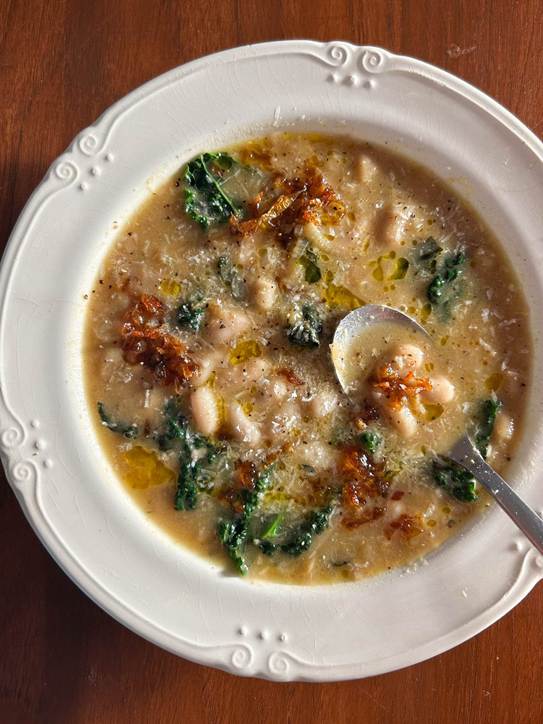
The practical vein ran through Lent as it had through January. A vegan “parmesan” recipe developed in the group: nutritional yeast, ground almonds, garlic powder, Lo-Salt, and a small amount of MSG prompted a lively conversation, with Philippe rehabilitating MSG from decades of racialised pseudoscience (“MSG is completely safe and delicious. This myth was also linked with a kind of racism towards the Chinese in America”). A brothy beans and greens recipe with sticky shallots was flagged as having converted a non-vegan partner. Beetroot dishes, mushroom cultivation, pea-mash on toast as a more sustainable alternative to avocado, the group’s culinary literacy continues to deepen.
Kerri’s end-of-Lent quiz was a moment of playful solidarity: the “ultimate vegan superpower” turned out, by consensus, to be “all of the above” …spotting milk powder from ten miles away, making anything into a burger, and reading ingredients at lightning speed.”
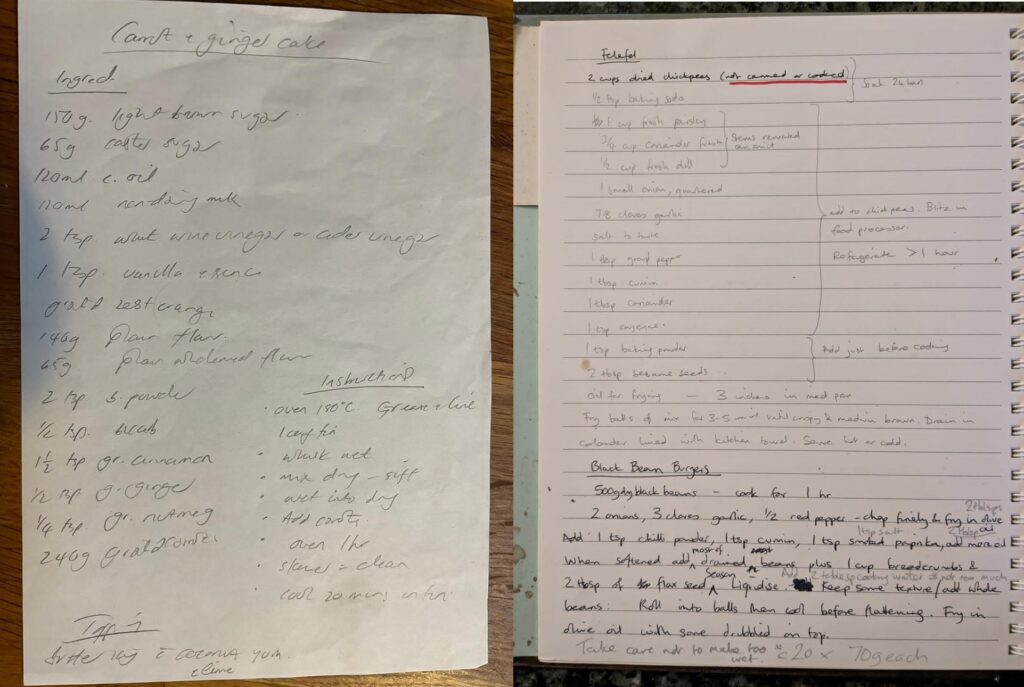
There was also the genuinely moving thread about handwritten recipes. Someone shared a recipe in their mother’s handwriting. One Friend described sticking sellotape over the worn pages to preserve them. Another recalled how her grandfather’s pecan pie recipe, printed on the back of his funeral order of service, moved people to tears. Some Friends proposed a QVW recipe collection to start with moments like this: “Something like a family recipe book to hand down?”
Deepening Ethical Engagement
Kes brought in data about the Good Food Institute entering Giving Green’s list of top biodiversity nonprofits, as an example of how plant-based transition is beginning to attract conservation funding. The UK government’s animal welfare strategy announcement in late December carried over into Lent discussions, with Friends both welcoming its ambition and scrutinising the consultation mechanisms likely to dilute it, including the conspicuous absence of any mention of farmed rabbit welfare.
One Friend shared a remarkable personal reflection on the connection between ethical consumption and mental health: “I genuinely think being vegan has been a huge part of the shift towards my positive relationship with food…learning that I can make choices about what I eat that make me feel better about myself and proud of the ways I try to have integrity, as opposed to making me feel worse about myself.” This willingness to connect veganism to our interior lives, to psychological and ethical wellbeing, was characteristic of our Lent’s particular emotional journey.
Results
Our end-of-Lent poll asked Friends to describe how they felt:
- Inspired: 4 votes
- Reflective: 3 votes
- Adjusting: 2 votes
- Proud: 2 votes
- Energised: 1 vote
- Glowing, Unsure, Surprised, Conflicted, Indifferent, Determined: 0 votes each
The results speak quietly but clearly. Nobody was indifferent, nobody was conflicted, nobody felt they had done enough and wanted to stop. The dominant feelings, which were “inspired and reflective” suggest a community that experienced Lent as something that brought openings, and that brought deeper attentions amongst the business of everyday life.
New Commitments
The most resonant close-of-Lent reflection came from a Friend who had been finding their way through the forty days:
“I enjoyed the Lent journey with this group. Thank you for the reflections which helped it to feel more connected and meaningful. Going forward I’m going to aim to be ‘vegan by default’. I’m not ready to commit to being fully vegan right now, but I’m planning from now on to choose/consider vegan options first, be it at the shop or eating out…This is my aim for my next stage.”
“Vegan by default” felt like an honest and generative formulation produced by those taking part in the Living Lent group. It names where many Friends actually are as they progress along an ethical project, and in the middle of a developing practice. Philippe’s response was immediate: “Great. What a lovely reflection…yes, the idea of ‘becoming vegan’ can sound daunting, but the act of choosing your next meal to be vegan can be powerful.”
Making it Work
The Vegan for Lent initiative succeeded for the same reasons Veganuary did, and for a few additional ones. Julie’s daily prompts gave the forty days a structure that prevented the initiative from dissipating. The community’s established relationships meant that real vulnerability about daily life, about mental health, about mistakes and compromises could be shared without fear of judgment. And Lent’s own spiritual grammar, reinterpreted through the lens of care for animals and earth, gave the practice a depth that felt qualitatively different to Veganuary.
As one Friend said simply, at the beginning of Lent’s first week: “I find this a very safe and nourishing space to be curious, honest and thoughtful, learning all the time.”
By any measure, this reflective depth, practical learning, sustained commitment and community warmth remain the best endorsement of what the Vegan Curious QVW group is and does and we wholeheartedly thank everyone who took part.
Looking Forward
The group continues to develop community within a curious vegan context. Suggestions for future seasonal initiatives are welcome. For those who joined during Lent and would like to stay connected, or for Friends who would like to point their meetings toward this community, the WhatsApp group remains open to other curious quakers living adventurously at qvw.org.uk.
In friendship, Quaker Vegan Witness